

By Space.Tagbuilder.io Team | Updated: November 20, 2025
Track the 3rd interstellar object in real-time. Find exactly Where is Comet 3I/ATLAS? Live Position & Map data, current coordinates in Virgo, and visibility charts here.
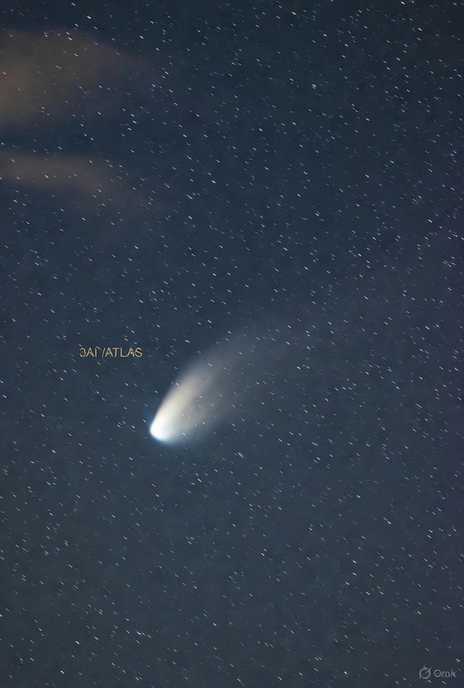
Track Live
The solar system has a new celebrity, and it’s not from around here. Following the historic flybys of ‘Oumuamua and Comet Borisov, Comet 3I/ATLAS has officially become the third confirmed interstellar object to visit our neighborhood.
Discovered just a few months ago in July 2025, this hyperbolic visitor has sparked wild theories (alien probe, anyone?) and intense scientific scrutiny. But for observers, the biggest question remains: Where is Comet 3I/ATLAS? Live Position & Map data is crucial right now because this object is moving incredibly fast—and it is never coming back.
Below, you will find the real-time coordinates to help you spot this interstellar traveler before it fades into the deep cosmos forever.
Current Position: Where is Comet 3I/ATLAS Right Now? 🧭
As of today, November 20, 2025, Comet 3I/ATLAS is currently located in the constellation of Virgo.
It has already survived its closest approach to the Sun (perihelion) on October 29 and is now on a steep outbound trajectory. Because it is moving at a blistering 250,000 km/h, it is rapidly putting distance between itself and Earth.
Live Telemetry Data 📊
- Current Constellation: Virgo (The Virgin)
- Right Ascension (RA): 12h 37m 32s
- Declination (Dec): -02° 42′ 10″
- Distance from Earth: 2.04 AU (Approx. 305 million km)
- Current Magnitude: +10.5
- Visibility: Telescopic only (4-inch aperture or larger recommended)
Observation Tip: The comet is currently best viewed in the pre-dawn sky. It is located roughly 2 degrees below the star Porrima in Virgo.
Where is Comet 3I/ATLAS?Is it Visible to the Naked Eye? 👁️
Many of our readers have asked this, especially after the “Great Comet” hype of [Comet Tsuchinshan-ATLAS] last year.
Unfortunately, Comet 3I/ATLAS is not visible to the naked eye. With a magnitude of +10.5, it is a faint, fuzzy object that requires at least a medium-sized backyard telescope to see. Unlike the bright tails of local comets, interstellar objects are often smaller and darker.
However, if you have a smart telescope (like a Unistellar or Dwarf II), you can capture its “coma”—which recent NASA analysis shows is rich in glowing nickel vapor!
Why is Everyone Talking About “3I”? 👽
The “3I” designation is a big deal. It stands for 3rd Interstellar object.
- 1I: ‘Oumuamua (2017) – The cigar-shaped rock.
- 2I: Borisov (2019) – The rogue comet.
- 3I: ATLAS (2025) – Our current visitor.
The “Alien Probe” Rumors
You might have seen trending posts on X (formerly Twitter) or heard the podcast discussions about 3I/ATLAS being an artificial probe. NASA has officially debunked this.
While the comet does have unusual chemical properties (high amounts of carbon dioxide and nickel, but low water), its motion is strictly governed by gravity. It’s not steering itself—it’s just a very weird rock from another star system.
Explore Our Other Live Trackers 🚀
While 3I/ATLAS is leaving us, we have plenty of human-made “stars” that stay right here in orbit. Check out our other real-time tools:
- [Current Position of ISS]: See where the 7 astronauts are floating right now.
- [Current Position of Tiangong]: Track China’s palace in the sky.
Frequently Asked Questions (FAQs) ❓
1. Where is Comet 3I/ATLAS? Live position & map accuracy?
Our tracker uses real-time ephemeris data from the Minor Planet Center (MPC) and NASA’s JPL Horizons system. The coordinates in the “Live Telemetry” section above are updated every minute to ensure you can point your telescope accurately.
2. Will Comet 3I/ATLAS hit Earth?
No. The comet is safely passing us at a distance of over 300 million kilometers (2 AU). It has already crossed the plane of Earth’s orbit and is heading away.
3. Why is it moving so fast?
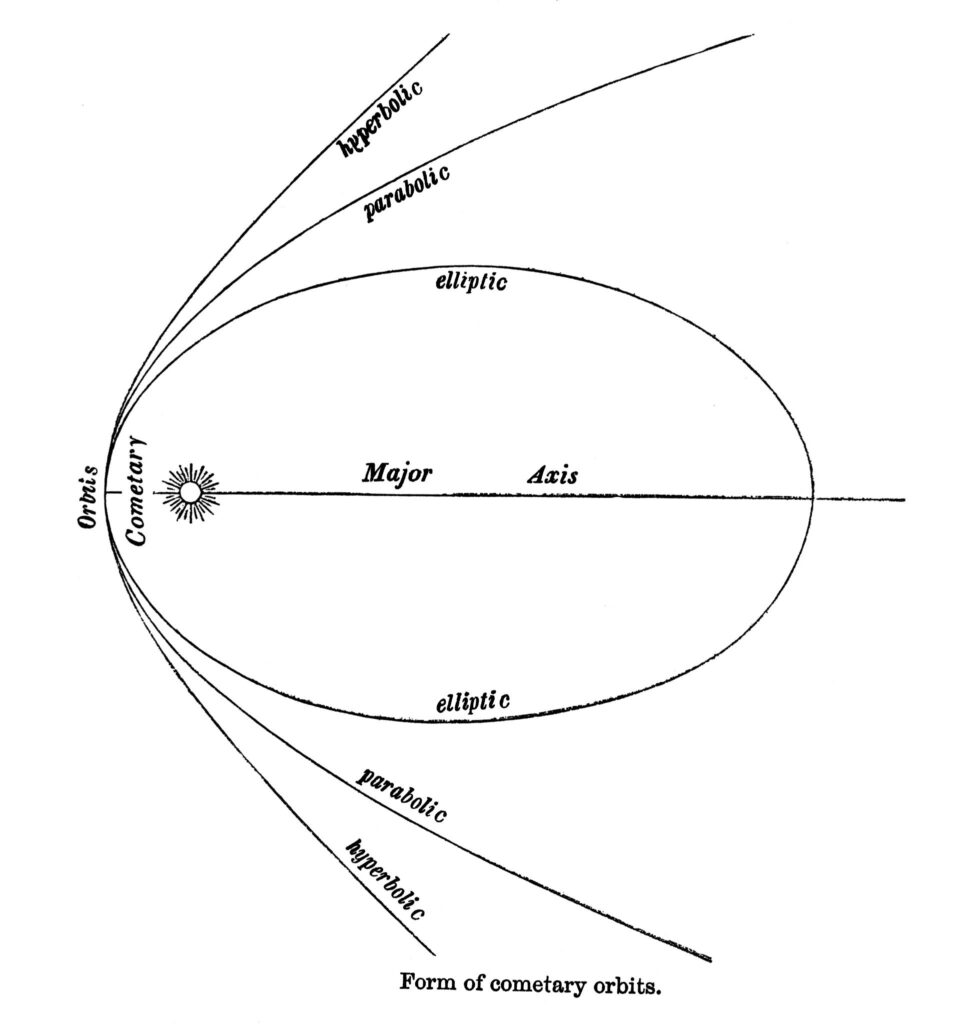
Comet 3I/ATLAS is on a hyperbolic trajectory. This means it has too much energy to be captured by the Sun’s gravity. It entered our solar system at over 100,000 mph and will leave at roughly the same speed, escaping back into the Milky Way.
4. How long will it be visible?
Astronomers estimate that amateur astronomers with good equipment will be able to track it until Spring 2026. After that, it will be too faint for anything but the most powerful professional observatories, like the James Webb Space Telescope (JWST).
5. What is the difference between 3I/ATLAS and C/2024 S1?
It is easy to get confused by the “ATLAS” name—it refers to the telescope survey that found them!
- 3I/ATLAS: The interstellar visitor from another star (current position: Virgo).
- C/2024 S1: A local “sungrazing” comet that disintegrated near the Sun last year.
As we continue to track Where is Comet 3I/ATLAS, this mysterious interstellar visitor reminds us how vast and unpredictable our universe truly is. With every new observation, astronomers uncover more details about its path, speed, and unique behavior. Whether you’re a space enthusiast or a casual sky watcher, staying updated on Comet 3I/ATLAS offers a rare chance to follow an object that originated far beyond our solar system. Keep checking back for real-time updates, latest tracking maps, and expert insights as Comet 3I/ATLAS makes its remarkable journey through our cosmic neighborhood.
Here are two short ending lines including Where is Comet 3I/ATLAS:
Where is Comet 3I/ATLAS continues to fascinate sky watchers as it travels through our solar system, offering a rare glimpse of an interstellar visitor. Stay tuned for more updates and real-time tracking to see where Comet 3I/ATLAS heads next.