

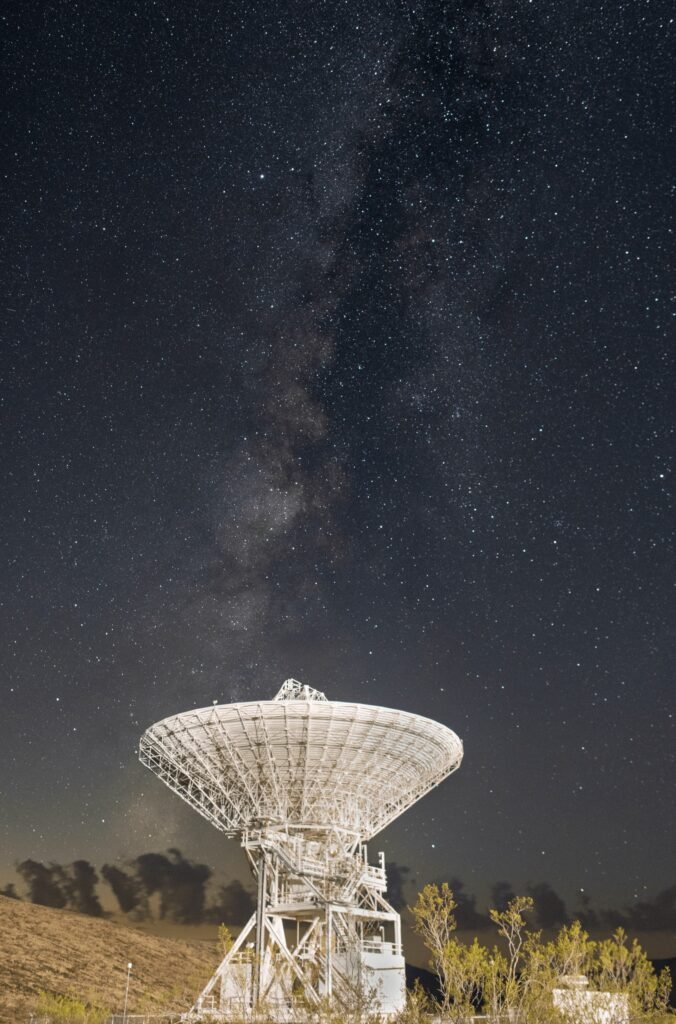
Deep Space Station 23 has officially joined NASA’s Deep Space Network following a ceremonial ribbon-cutting event held at the Goldstone complex near Barstow, California, on August 25, 2026. Key leaders from NASA Headquarters, the Jet Propulsion Laboratory, and the communications program gathered on-site to mark the operational milestone for the advanced dish. The addition of this dish represents another major step forward in modernizing the infrastructure that keeps Earth connected to spacecraft exploring the far reaches of the solar system.
Deep Space Station 23: The Confirmed Findings
2 Launch Capabilities at the Goldstone Antenna Complex
The newly unveiled antenna is a 34-meter (114-foot) multifrequency beam-waveguide dish designed to operate across multiple radio frequency bands. Situated in the Mojave Desert, the dish enhances the overall sensitivity and capacity of the Deep Space Network’s Goldstone site. By using flexible beam-waveguide design principles, engineers can route signal pathways into climate-controlled rooms beneath the main reflector, simplifying maintenance and enabling smoother upgrades for sensitive electronics over time.
2 Deep Space Station 23 and the Aperture Enhancement Project
The construction and deployment of this facility fall under the Deep Space Network’s broader Aperture Enhancement Project. Initiated in 2009, the initiative was established to systematically expand and upgrade NASA’s communications infrastructure by adding six modern 34-meter multifrequency antennas. With its versatile signal capabilities, Deep Space Station 23 is structured to handle data streams, command transmissions, and navigation tracking for diverse robotic probes and scientific deep-space craft operating simultaneously.
2 Essential Infrastructure for Faraway Missions
Managing interplanetary communications requires continuous coverage as Earth rotates. The Deep Space Network relies on global sites to communicate with robotic wanderers and astronomical observatories. The network is managed by JPL, a division of Caltech in Southern California, under the direction of the Space Communications and Navigation program within NASA’s Research and Technology Mission Directorate. The addition of new high-capacity dishes ensures that upcoming science missions can send home rich telemetry and high-definition imagery without bottlenecking data flow.