

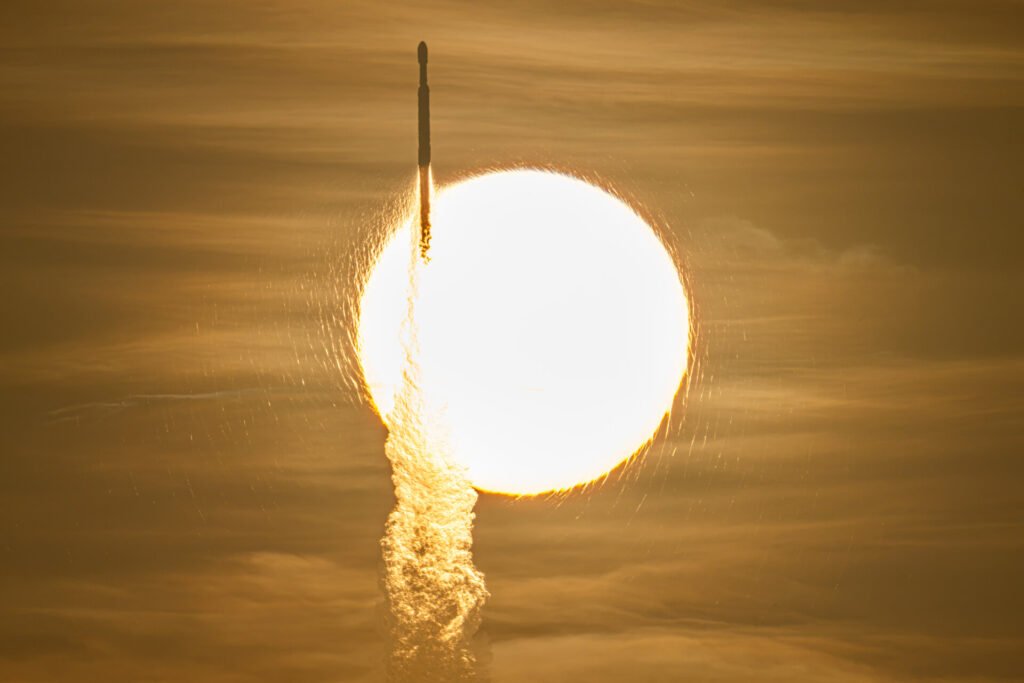
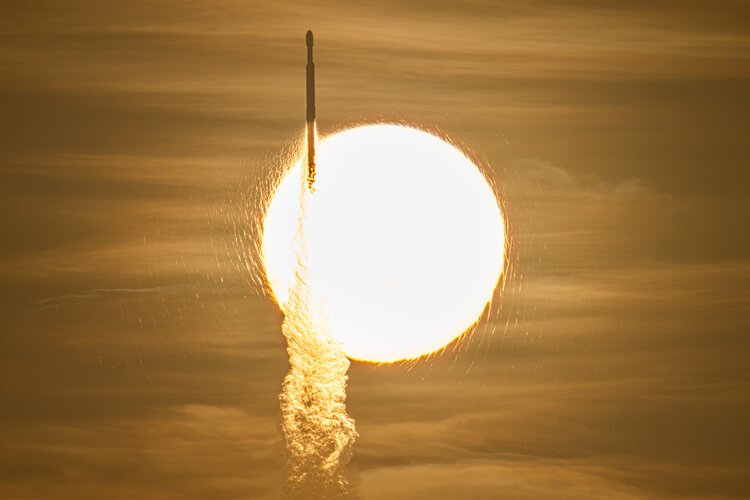
Nancy Grace Roman space telescope lift-off achieved a major milestone on August 30, 2026, launching successfully aboard a SpaceX Falcon Heavy rocket from NASA’s Kennedy Space Center in Florida. The launch occurred at 07:26 EDT, sending the mission on its path to map the universe in visible to near-infrared light. The primary objective of this NASA-led initiative is to investigate the puzzling nature of dark energy and dark matter while conducting an extensive survey of exoplanets throughout our galaxy.
Nancy Grace Roman space: International Collaboration and High-Precision Instruments
While NASA leads the mission, the European Space Agency (ESA) provided critical components for the spacecraft. ESA contributed the star trackers, onboard batteries, and specialized detectors for the observatory’s Coronagraph Instrument technology demonstration. The mission features a 2.4-meter primary mirror alongside its core optical suite, which includes the Wide Field Instrument (WFI). To maintain continuous communication and facilitate data transmission, ESA will deploy its deep-space ground station network, including a new 35-meter antenna located in New Norcia, Australia.
Journey to the Second Sun-Earth Lagrange Point
Following its launch, the Nancy Grace Roman space telescope began its trajectory toward the second Sun-Earth Lagrange point (L2), situated approximately 1.5 million kilometers from Earth. Operating in a wide orbit around L2—substantially larger than the Moon’s orbit around Earth—allows the observatory an unobstructed view covering nearly 12 percent of the sky. This vantage point matches the orbital strategy utilized by other major deep-space observatories, such as ESA’s Euclid telescope and the James Webb Space Telescope.
Unlocking Cosmic Secrets and Exoplanet Diversity
Once situated at L2, the observatory will conduct fast, large-scale sky surveys using its wide-field infrared capabilities. By mapping galaxy clustering over cosmic time and tracking thousands of distant type Ia supernovas, astronomers hope to determine whether dark energy remains constant or evolves. The spacecraft will also carry out a comprehensive exoplanet census capable of discovering thousands of worlds, including distant cold gas giants and free-floating rogue planets drifting without a host star.
Deployment Timeline and Mission Operations
The spacecraft’s first three months after launch are dedicated to a complex series of instrument deployments, optical calibrations, and system tests. Following the completion of this commissioning phase, full science operations will commence with the release of the observatory’s first official science image. The mission is planned for at least five years of primary science scanning, with an operational design capable of extending observations in space for up to ten years.