

NASA’s Roman Space Telescope has officially begun its long-awaited journey into deep space, lifting off at 7:26 a.m. EDT on a SpaceX Falcon Heavy rocket from Launch Complex 39A at Kennedy Space Center in Florida. The advanced observatory is currently heading to a final orbit roughly one million miles from Earth, where its sweeping panoramic eye will transform our understanding of cosmic history, dark energy, dark matter, and distant alien worlds.
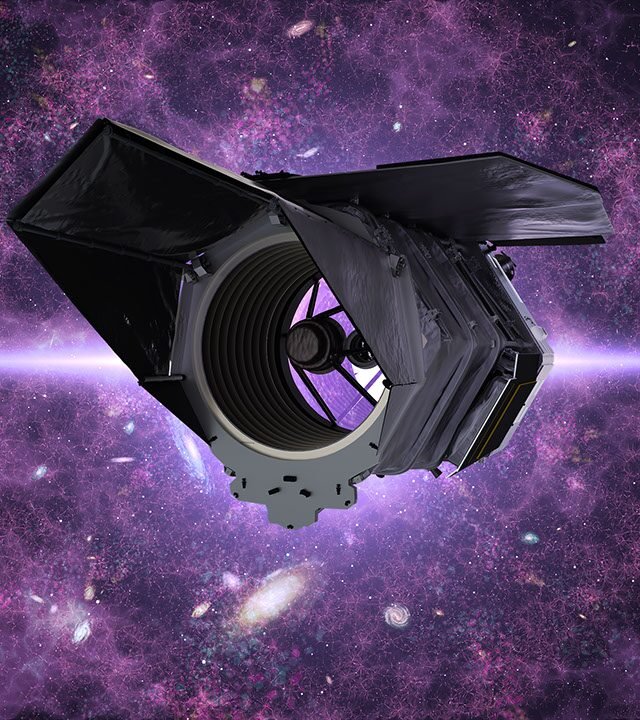
NASA’s Roman Space Telescope: Cruising to Lagrange Point 2 and Deploying Key Systems
Just seven minutes after liftoff, mission controllers at NASA’s Goddard Space Flight Center in Greenbelt, Maryland, confirmed telemetry from the spacecraft. Falcon Heavy performed flawlessly, releasing the observatory 31 minutes into flight while its dual side boosters executed precision returns to Florida for future reuse. About 70 minutes after launch, communications shifted from the Near Space Network to NASA’s Deep Space Network, starting with the Canberra ground terminal in Australia before handing off to tracking facilities in Madrid and Goldstone.
Crucial milestones followed swiftly. An hour and 23 minutes into the mission, engineers confirmed that the telescope’s solar arrays and lower instrument sun shade had fully deployed. Over the coming days, controllers will extend the high-gain antenna, open the deployable aperture cover, initiate the first trajectory adjustment burns, and power on the Coronagraph Instrument.
A 300 Megapixel Infrared Vision Built for Speed
The mission’s scientific engine rests within the Wide Field Instrument, a giant 300 megapixel infrared camera powered by 18 individual 4K detectors. Engineered for incredible optical stability during high-speed slewing, Roman can snap wide-field panoramas without tedious settling delays. This architecture enables the observatory to survey the infrared sky roughly 1,000 times faster than the Hubble Space Telescope.
While Hubble captures exquisite details across small patches of the sky, Roman pairs equal clarity with an extraordinarily broad view. This capabilities balance will allow astronomers to census billions of stars, trace galaxy distributions across billions of light-years, and discover thousands of new exoplanets in record time.
Demonstrating Coronagraph Technology for World Imaging
Alongside its main camera, Roman carries a technology demonstration known as the Coronagraph Instrument. Designed to block out the blinding glare of distant stars, this system will allow researchers to image gas giant exoplanets similar in scale to Jupiter. Direct imaging of exoplanets is immensely challenging because host stars outshine their orbiting planets by billions of times.
By testing starlight-suppression techniques in space, the coronagraph will lay essential technical foundations for future observatories, such as the proposed Habitable Worlds Observatory, which aims to directly snapshot smaller, Earth-like planets searching for signatures of habitability.
Managing a Massive Scientific Data Stream
Roman will take approximately three months to reach its target orbit around the second Sun-Earth Lagrange point (L2). This gravitational equilibrium point permits stable positioning while minimizing station-keeping fuel. Commissioning, calibration, and instrument testing will occupy the remainder of the three-month period, with the mission’s first scientific images expected in early 2027.
Once routine observations begin, Roman will beam approximately 1.4 terabytes of data back to Earth every single day—the highest volume of any NASA astrophysics mission to date. To process this immense flow, research teams will rely on machine learning algorithms, automated processing pipelines, and citizen science programs to flag compelling targets for deeper study.