

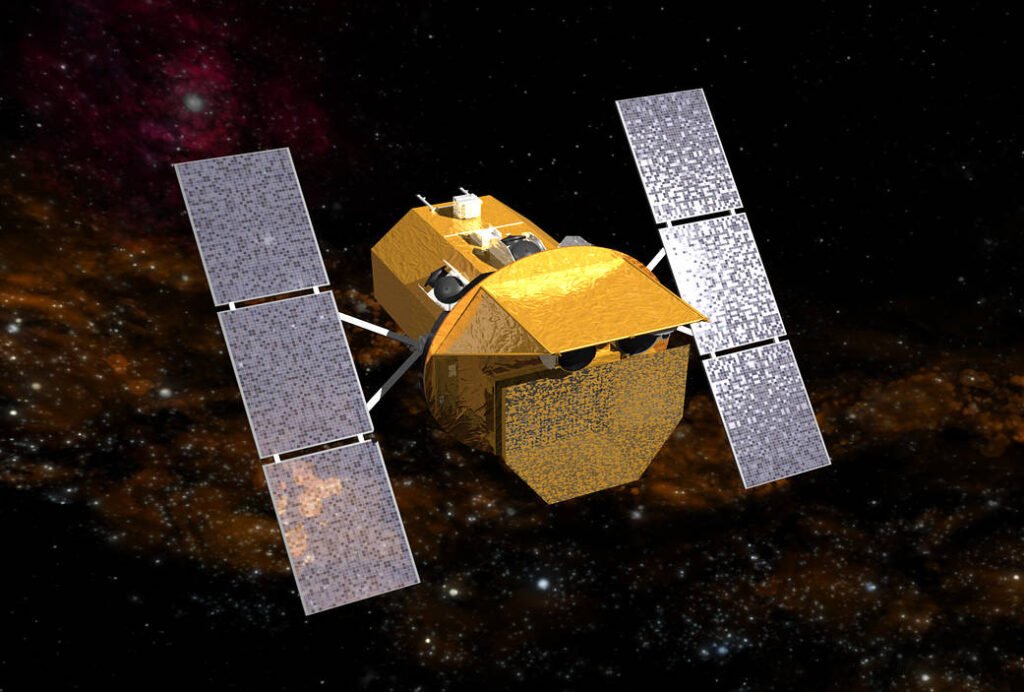
Swift space observatory — NASA’s Swift space observatory has resumed gathering science data after months of power-saving measures, even as its orbit continues an unavoidable descent toward Earth. Ground controllers successfully powered back on the spacecraft’s Ultraviolet/Optical Telescope and X-ray Telescope on August 26. These key sensors had been deactivated since February in a calculated effort to minimize atmospheric drag and keep the veteran observatory operating as long as possible while engineers explored an ambitious orbital rescue mission.
The Critical Role of Swift Space Observatory in Tracking Transients
For more than two decades, the Neil Gehrels Swift Observatory has served as a cornerstone of time-domain astrophysics. Operating across multiple wavelengths of light, the mission excels at identifying and analyzing rapid, unpredictable high-energy outbursts across the universe. When a transient event occurs, the flexible spacecraft rapidly pivots to align its onboard sensors with the target, immediately alerting ground-based observatories and other space instruments to conduct synchronized follow-up studies before the phenomenon fades from view.
Solar Heating and Atmospheric Expansion Accelerate Orbital Decay
Operating in low Earth orbit exposes the spacecraft to tenuous upper layers of the atmosphere. Although subtle, these diffuse gases produce ongoing drag that constantly bleeds off kinetic energy, gradually lowering the satellite’s altitude. Because Swift lacks an onboard propulsion system, it cannot independently fire thrusters to climb to higher altitudes.
This persistent issue worsened dramatically during periods of heightened solar activity. Intense radiation from the Sun heats Earth’s upper atmosphere, causing the thermosphere to swell outward into space. The expanding gas heightened atmospheric drag on Swift, accelerating its loss of altitude and forcing mission managers to take urgent measures.
Abandoned Rendezvous leaves Swift Space Observatory Facing Altitude Thresholds
To rescue the declining spacecraft, NASA contracted Katalyst Space in September 2025 to develop a specialized mission named LINK. Designed, assembled, and tested within a single year, LINK launched in July aboard a Northrop Grumman Pegasus rocket with the objective of capturing Swift and pushing it into a safer, elevated orbit. However, shortly after reaching space, LINK encountered critical attitude control problems. On August 19, NASA and Katalyst announced that the docking and orbit-raising attempt had been canceled. Katalyst still intends to maneuver LINK near Swift to test autonomous proximity and rendezvous technologies for future satellite servicing applications.
To reduce drag during the rescue planning phase, engineers shut down the observatory’s third sensor, the Burst Alert Telescope, in April. This allowed them to tilt Swift’s solar panels into a low-drag orientation. With science observations now active again, the spacecraft’s remaining time above the vital 300-kilometer (185-mile) altitude mark has shrunk significantly. Once Swift dips below this boundary, dense atmospheric resistance makes precision science operations increasingly difficult while triggering rapid orbital decay. Controllers expect Swift to hit this crucial milestone within the next month or two, though they plan to restore the Burst Alert Telescope in the coming weeks to capture as much data as possible before the observatory reenters the atmosphere.