

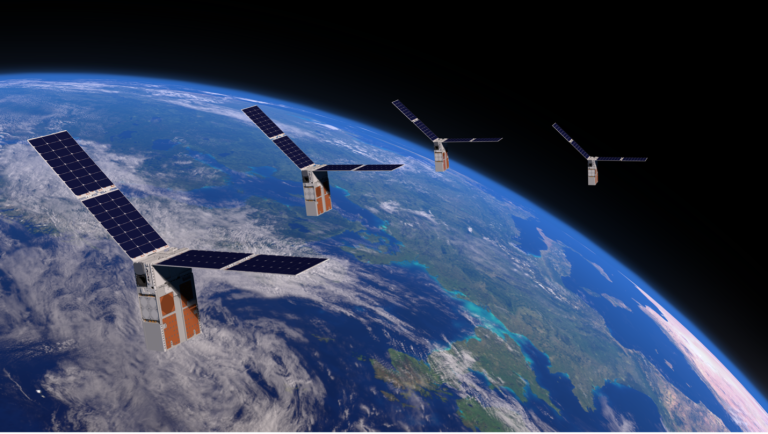
Starlink satellite train — A Starlink satellite train creates a striking line of lights across the night sky shortly after SpaceX launches new internet satellites into orbit. These closely grouped spacecraft appear as a fast-moving, glowing sequence that frequently draws the attention of skywatchers worldwide. Observers often spot these formations moving together in a straight line before the individual satellites raise their altitude and separate into their dedicated operational paths.
How SpaceX Launches Create the Starlink Satellite Train
The distinctive appearance of a Starlink satellite train occurs because the spacecraft are released together in low-Earth orbit. Shortly after deployment, the satellites travel in close alignment while preparing to ascend to their final operational altitude of approximately 340 miles (550 kilometers) above Earth. During this initial phase, their close proximity and low elevation make them noticeably reflective to observers on the ground.
As these satellites begin using their on-board thrusters to climb toward their working orbits, they gradually spread apart. Eventually, they disperse across the sky and blend into the broader background of stars. Because SpaceX launches these missions frequently—sometimes multiple times per week—the opportunity to spot a newly formed constellation sequence happens regularly following fresh orbital deployments.
Reflected Sunlight and Visibility Conditions
Satellites in a Starlink satellite train do not produce their own light. Instead, they become visible purely by reflecting sunlight back down to Earth. These sightings happen during twilight periods, specifically shortly after sunset or just before sunrise. At these times, the ground below is dark, but the elevated satellites remain high enough to catch direct solar rays.
Because low-Earth orbit spacecraft complete a full trip around the planet roughly every 90 minutes, observers in suitable viewing windows can occasionally spot a passing cluster more than once in a single night. However, newer Starlink generations are less bright than the earliest models launched in 2019. To minimize interference with scientific astronomical observations, SpaceX implemented mitigation efforts, such as the Starlink VisorSat program, designed to darken the spacecraft surfaces and reduce reflection.
Tracking Constellation Growth and Unplanned Reentries
Tracking by astronomer Jonathan McDowell indicates that by July 30, 2026, the Starlink network had reached 10,876 satellites in orbit, with 10,860 actively working. Reports from NASA Spaceflight note that the complete megaconstellation could eventually expand to as many as 42,000 spacecraft. While these platforms deliver high-speed global internet coverage, advocacy groups and astronomers continue to raise concerns over light pollution and the ongoing industrialization of low-Earth orbit, calling for enhanced government oversight.
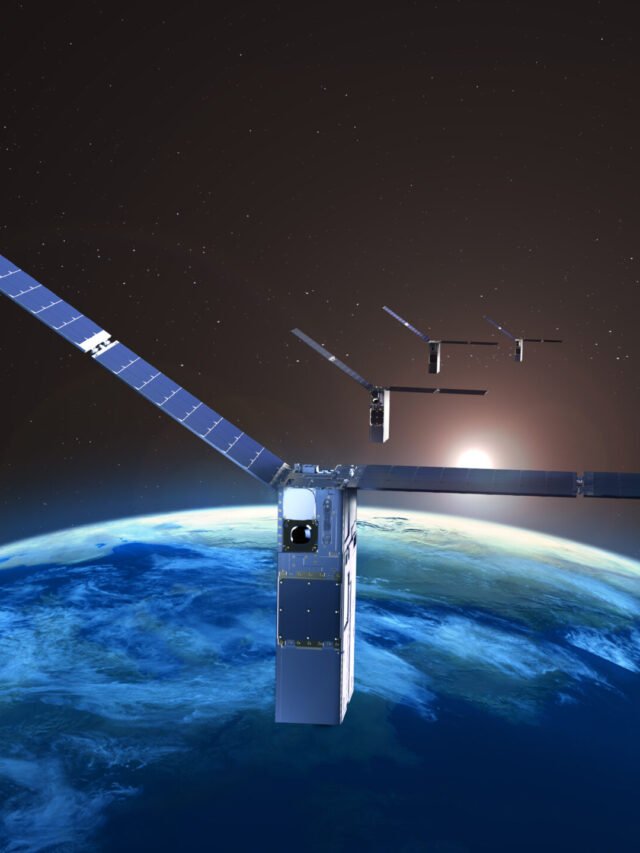
When spacecraft fail to achieve stable orbit, their return to Earth offers another rare visual display. For instance, on February 4, 2022, a severe geomagnetic storm impacted a newly launched batch of Starlink satellites, preventing them from reaching their destination altitude. Over the following days, the hardware reentered the atmosphere, producing dramatic fireballs as the space debris burned up over regions like Puerto Rico on February 7, 2022.