

Summer heat wave activity reached extraordinary levels across Western Europe during the summer of 2026, driven by a series of high-pressure weather systems that continuously pushed temperatures past record thresholds. Data captured by space-based instruments alongside predictive atmospheric models from NASA show how successive warm spells began early in the season and persisted well into August. By combining orbital observations with mathematical atmospheric physics, researchers are gaining a clearer picture of how extreme thermal conditions build up, persist overnight, and impact millions of residents in regions unaccustomed to prolonged extreme heat.
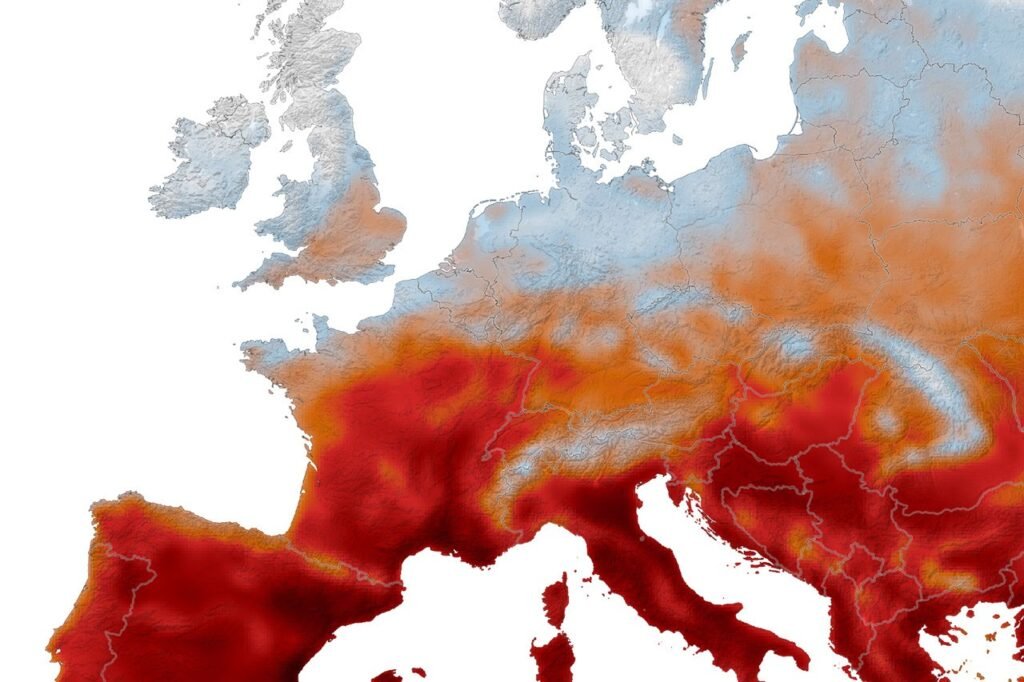
Tracking the 2026 Summer Heat Wave From Orbit
The unusual weather patterns began in May 2026, when an intense heat dome formed over Western Europe. What initially appeared to be an isolated early spike marked the start of a sustained pattern. By mid-August, the region was experiencing its fifth distinct heat wave of the summer. During these events, maximum daytime temperatures repeatedly crossed 40 degrees Celsius (104 degrees Fahrenheit) across broad swaths of the continent. Rather than cooling down after sunset, night conditions frequently remained elevated, preventing normal thermal recovery in both rural and urban areas.
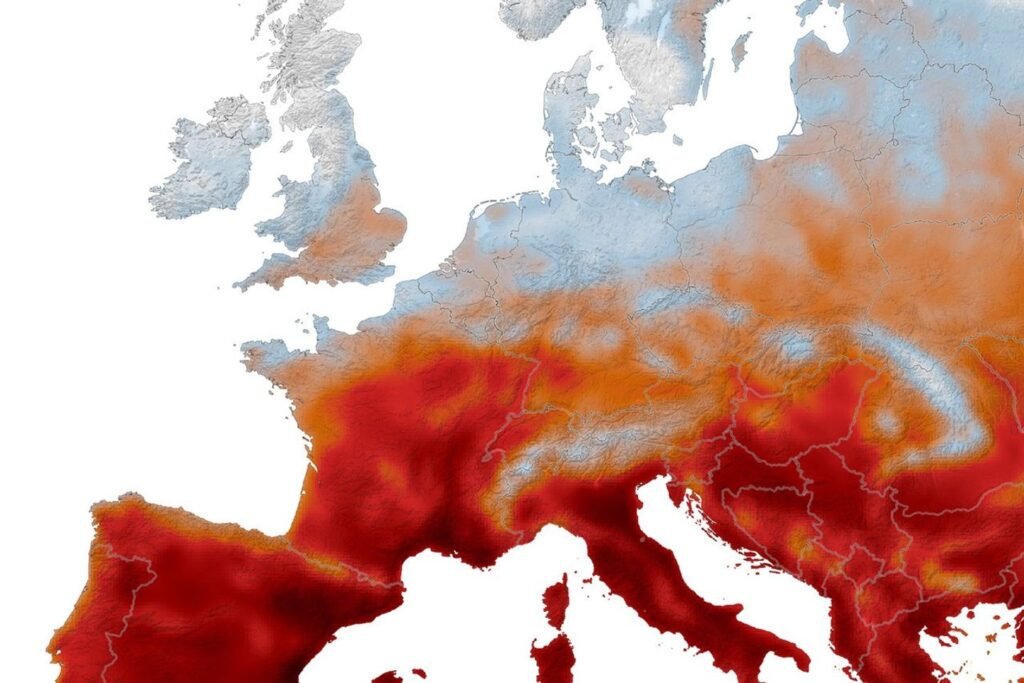
To map the geographic reach of these high temperatures, scientists utilized the Goddard Earth Observing System global model, known as GEOS, developed by NASA. By merging satellite measurements with global atmospheric equations, the model tracked daily maximum surface air temperatures from May 1 through August 19, 2026. This combined data demonstrated that combined June and July temperatures in Western Europe were the highest ever recorded by Europe’s Copernicus climate monitoring service.
Local Temperature Records Broken Across the Continent
Regional meteorological agencies documented unprecedented spikes during each successive heat wave. On May 26, the UK Met Office confirmed that London reached 35.1°C (95.2°F), exceeding the previous record for May by 2.3°C (4.1°F). In France, Météo-France recorded three consecutive days of record-breaking maximum temperatures in Bordeaux, capped by a peak of 42.5°C on June 24. Farther east, Slovakia established new national benchmarks for both daytime maximums and nighttime minimums in August.
The persistent heat compounded existing environmental pressures, severely worsening an ongoing regional drought. Unusually high temperatures caused major river levels to drop to record lows, disrupting agricultural production, inland transportation channels, and regional power generation. At the same time, destructive wildfires broke out in areas that historically experienced such events only rarely, while ground infrastructure suffered as rail tracks and highway surfaces buckled under persistent thermal expansion.
Vulnerability Factors and Human Health Impacts
The health consequences of the extreme warmth were amplified by specific demographic and structural factors across Europe. Data analyzed by the World Health Organization indicates that heat stress is the primary driver of weather-related mortality globally, worsening cardiovascular conditions, asthma, diabetes, and mental health issues. Worldwide, an estimated 489,000 heat-related deaths occur every year, with Europe accounting for roughly 36 percent of that total and Asia accounting for 45 percent. Preliminary assessments suggest that the 2026 summer heat wave events in Europe were associated with approximately 10,000 excess deaths, particularly within the United Kingdom, France, Germany, and Belgium.
A major vulnerability in European cities is the relatively low adoption of home cooling systems. According to data from the International Energy Agency, only 23 percent of European homes possess air conditioning, compared to 90 percent in the United States. Researchers note that this gap contributes directly to elevated mortality during European heat waves. Furthermore, dense urban environments frequently lack sufficient green spaces and tree canopy coverage to mitigate the urban heat island effect, leading to heat exhaustion and severe heatstroke when high temperatures persist overnight.

Space Observations and Demographic Risk Modeling
To assist urban planners in building thermal resilience, researchers have turned to thermal imaging data gathered by NASA space missions, such as ECOSTRESS on the International Space Station. Studies led by researchers at institutions including New York University use these spaceborne thermal maps to identify microclimates where heat retention is highest. Short-term mitigation strategies focus on targeted emergency response, while long-term interventions include planting urban forests, expanding public parks, applying reflective paint to rooftops, and adopting building materials that absorb less solar radiation.
Sociological and climate research supported by NASA data also highlights the intersection of rising temperatures with an aging population. Research led by scientists at Boston University examined demographic distributions alongside climate archives to locate areas facing the highest risk of heat exposure. For older adults with underlying health conditions, ambient temperatures as low as 26.7°C (80°F) can present significant physical danger, especially when nighttime temperatures remain high in homes without mechanical cooling.
A August 2026 study published in The Lancet Planetary Health by Stanford researcher Qinqin Kong further evaluated human heat tolerance thresholds across different age groups. Supported by a NASA Earth and Space Science and Technology award, the study projected where rising temperatures will likely exceed human physiological limits in the coming decades. The research shows that safe limits will be breached more frequently across larger areas, placing disproportionate risk on older populations and underscoring the urgent need for targeted heat action plans and updated health infrastructure.