

Nancy Grace Roman launch
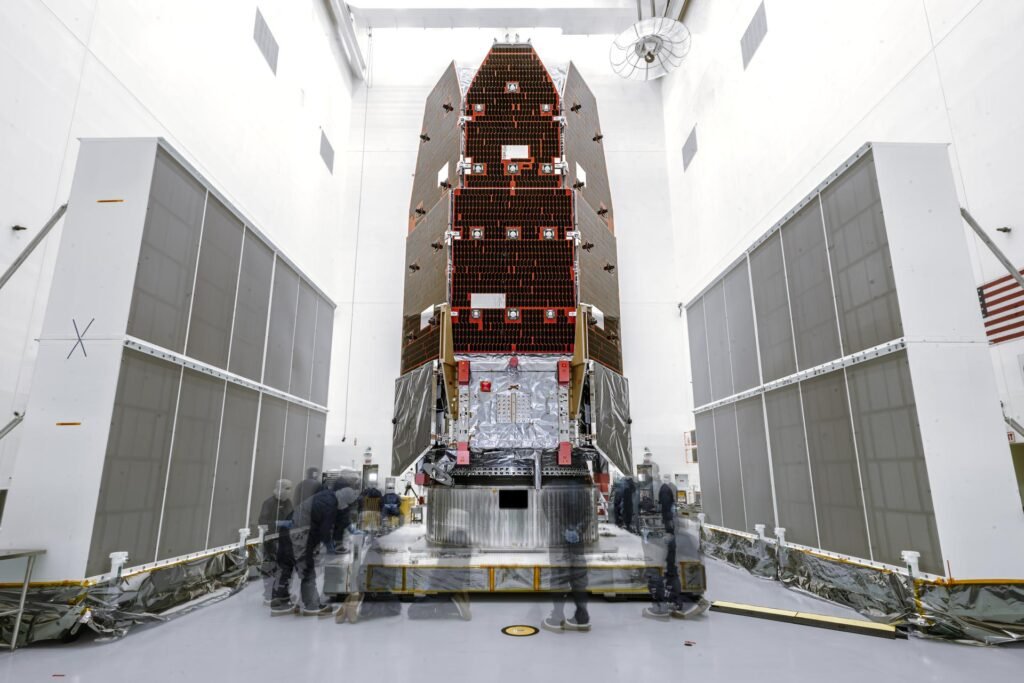
preparations have entered their final operational phase after mission managers formally certified the observatory’s flight readiness. Following a comprehensive review conducted at NASA’s Kennedy Space Center in Florida, teams from NASA, SpaceX, and the telescope project confirmed that the spacecraft, launch vehicle, and ground systems are fully prepared to proceed toward liftoff.
Milestone Assessment at Kennedy Space Center
The Flight Readiness Review brought together leadership and technical experts to evaluate every operational aspect of the mission. During the Friday assessment, specialists thoroughly examined the observatory’s hardware, payload integration status, range safety protocols, and rocket assembly. Passing this review represents a critical milestone, allowing launch crews to transition into the final sequence of pre-flight operations on the Florida coast.
With official certification granted, technicians are now focusing on the physical integration of the observatory with its launch vehicle. The spacecraft is already enclosed within the protective payload fairing, which will safeguard the sensitive optical instruments from aerodynamic forces and atmospheric heating during the initial ascent through Earth’s atmosphere.
Falcon Heavy Integration Sequence for the Nancy Grace Roman Launch
The current operational timeline targets liftoff no earlier than 7:26 a.m. EDT on Sunday, Aug. 30. The observatory will ride into orbit aboard a SpaceX Falcon Heavy rocket launching from Launch Complex 39A at Kennedy Space Center. To support the heavy payload and high-energy trajectory required for the mission, Falcon Heavy utilizes three connected rocket boosters that generate the immense thrust needed to lift massive scientific hardware beyond Earth.
In the coming days, ground crews will transfer the encapsulated Roman observatory to SpaceX’s hangar facility located at pad 39A. Once inside, technicians will secure the fairing assembly to the top of the Falcon Heavy rocket. Following full mechanical and electrical connections, the integrated launch vehicle and telescope will be rolled out to the launch pad for final system checks and propellant loading operations prior to ignition.
Wide-Field Exploration of Cosmogony and Exoplanets
Designed as NASA’s next premier orbital observatory, Roman is engineered to deliver a vast, wide-field view of the universe. By surveying expansive swathes of the sky simultaneously, the telescope will collect extensive astronomical datasets aimed at addressing fundamental questions regarding cosmic structure and evolution.
Astronomers intend to utilize Roman to investigate the cosmic expansion rate and probe the nature of forces driving the evolution of the universe over billions of years. Beyond cosmological surveys, the telescope features specialized capabilities to detect and analyze planets orbiting distant stars. By conducting broad observational surveys, Roman will significantly expand the catalog of known exoplanets while refining our understanding of how planetary systems form and endure across the Milky Way.
ok