

Voyager 1
- Distance from Earth
- ——
- Distance from Sun
- ——
- One-way light time
- —
- Heliocentric speed
- —
- Earth range rate
- —
- Vector epoch
- —
Interstellar probe
The most distant human-made object, continuing through interstellar space.
- Status
- Active mission
- Launch date
- 1977-09-05
Explore the live journey
NASA's milestone occurs Nov. 18, 2026 at 2:16:07 a.m. PST.
Send a signal to Voyager 1
Use the current JPL-derived light time to see how long a command and earliest possible reply would take.
Turn the distance into human scale
- Earth–Sun distances
- —
- Light travel time
- —
- Round-trip conversation
- —
- 1977Launch
- 1979Jupiter
- 1980Saturn
- 2012Interstellar space
- NowContinuing outward
Voyager 2
- Distance from Earth
- ——
- Distance from Sun
- ——
- One-way light time
- —
- Heliocentric speed
- —
- Earth range rate
- —
- Vector epoch
- —
Interstellar probe
The only spacecraft to visit Uranus and Neptune, now travelling in interstellar space.
- Status
- Active mission
- Launch date
- 1977-08-20
Explore the live journey
Send a signal to Voyager 2
Use the current JPL-derived light time to see how long a command and earliest possible reply would take.
Turn the distance into human scale
- Earth–Sun distances
- —
- Light travel time
- —
- Round-trip conversation
- —
- 1977Launch
- 1979Jupiter
- 1981Saturn
- 1986Uranus
- 1989Neptune
- 2018Interstellar space
- NowContinuing outward
The two interactive trackers above show calculated ephemeris positions for Voyager 1 and Voyager 2. Each view includes distance from Earth and the Sun, one-way light time, heliocentric speed, Earth range rate and the vector epoch used for the calculation.
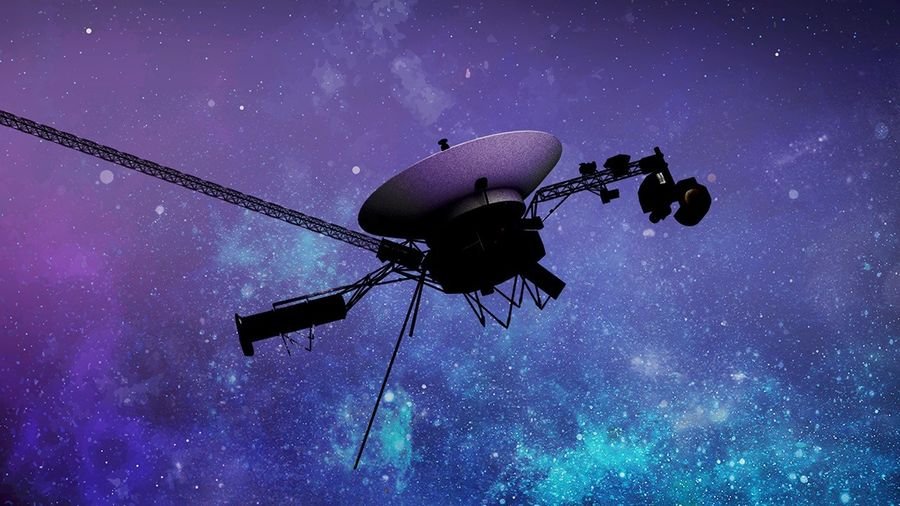
Where Voyager 1 and Voyager 2 are now
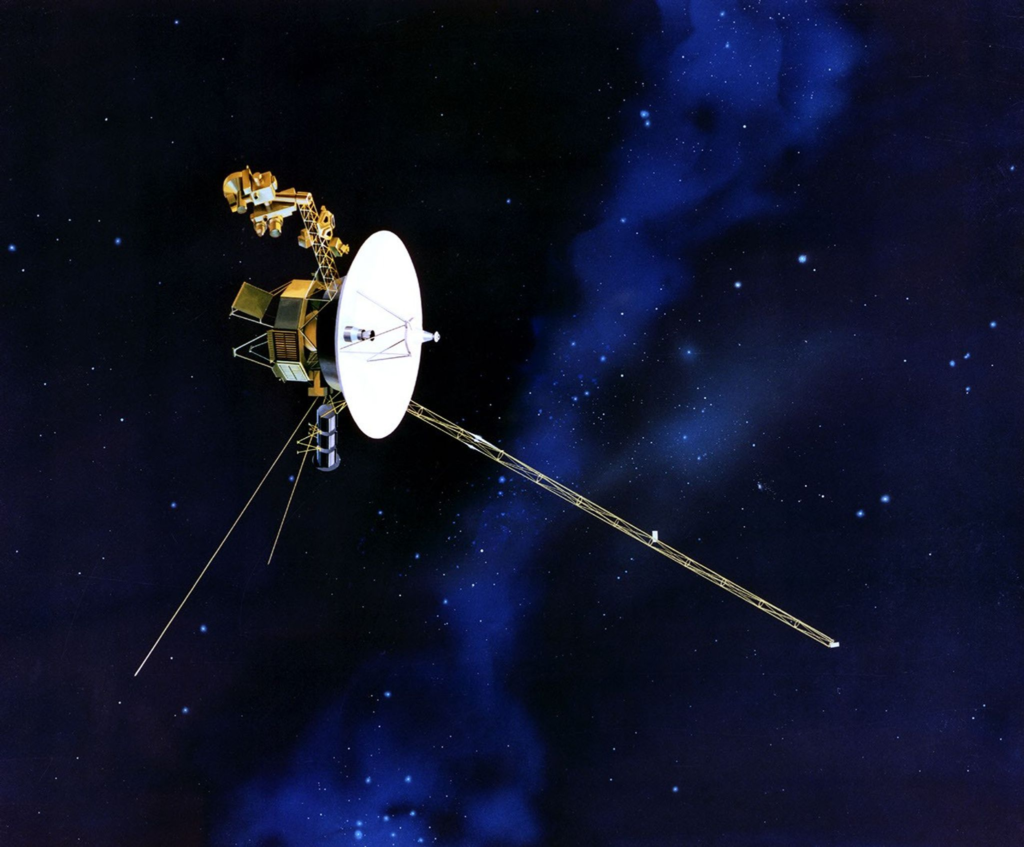
Both spacecraft are traveling through interstellar space beyond the heliopause, but they are moving in different directions and at different distances. Instead of publishing a static distance that becomes outdated, this page reads current ephemeris vectors and calculates the values shown in the tracker.
NASA maintains an official Where are Voyager 1 and 2 now? resource, while the broader Voyager mission page covers the spacecraft, discoveries and interstellar mission.
Why the values are ephemerides, not live telemetry
TagBuilder Space requests state vectors from NASA/JPL Horizons and interpolates between them. That produces a calculated location for the selected epoch. The tracker intentionally labels this as a JPL Horizons ephemeris because a deep-space position model is different from a real-time onboard telemetry feed.
At Voyager distances, even radio signals take many hours to travel one way. The displayed one-way light time helps explain why commanding and receiving data from the spacecraft cannot happen instantly.
What the 3D view shows
The deep-space canvas uses a compressed scale so the Sun, trajectory and spacecraft can be viewed together. Drag to rotate and zoom to inspect direction and relative geometry. The line and distance labels are designed to communicate scale, not to reproduce the solar system at a literal screen-space scale.
Voyager 1 and Voyager 2 are different missions
Voyager 1 is the most distant human-made object. Voyager 2 followed a different grand-tour trajectory and remains the only spacecraft to have visited Uranus and Neptune. Keeping two separate trackers on this page lets you compare their current ephemeris values without mixing the missions into one static estimate.
Related deep-space trackers
Explore the James Webb Space Telescope tracker for an observatory near Sun-Earth L2, or return to Earth orbit with the Hubble tracker.
Why Voyager distance changes every day
Voyager 1 and Voyager 2 continue moving outward, but the displayed distance from Earth is not simply a fixed number added each day. Earth itself moves around the Sun, while each Voyager spacecraft follows its own outbound trajectory. The Earth-to-spacecraft range and range rate therefore reflect the geometry of two moving objects.
The tracker uses NASA/JPL Horizons state vectors so the numbers can be calculated for the current epoch instead of relying on a static distance embedded in an article. The JPL Horizons system is the authoritative ephemeris source used for the calculated positions.
Communication delay is part of deep-space tracking
At Voyager distances, radio signals require many hours to travel one way. The light-time field turns that enormous range into an intuitive measure: even at the speed of light, a command cannot reach the spacecraft instantly. Mission operations therefore work very differently from controlling a satellite in low Earth orbit.
Continue comparing deep-space missions
For a much closer observatory near Sun–Earth L2, open the James Webb Space Telescope tracker. To follow another object on an unbound path through the solar system, see the Comet 3I/ATLAS tracker. NASA's official Voyager mission page remains the best source for spacecraft history, instruments and mission updates.